I’m currently working on implementing an OEE (Overall Equipment Effectiveness) KPI within Epicor Kinetic and would like to hear from anyone who has experience implementing this metric in Kinetic.
I’m particularly interested in understanding how you have approached the calculation of the three OEE components:
Availability: Actual run time versus planned production time, accounting for unplanned downtime.
Performance: Actual production output versus expected production output based on the ideal cycle time.
Quality: Good units produced versus total units produced.
A few questions:
Has anyone successfully implemented OEE reporting directly within Epicor Kinetic?
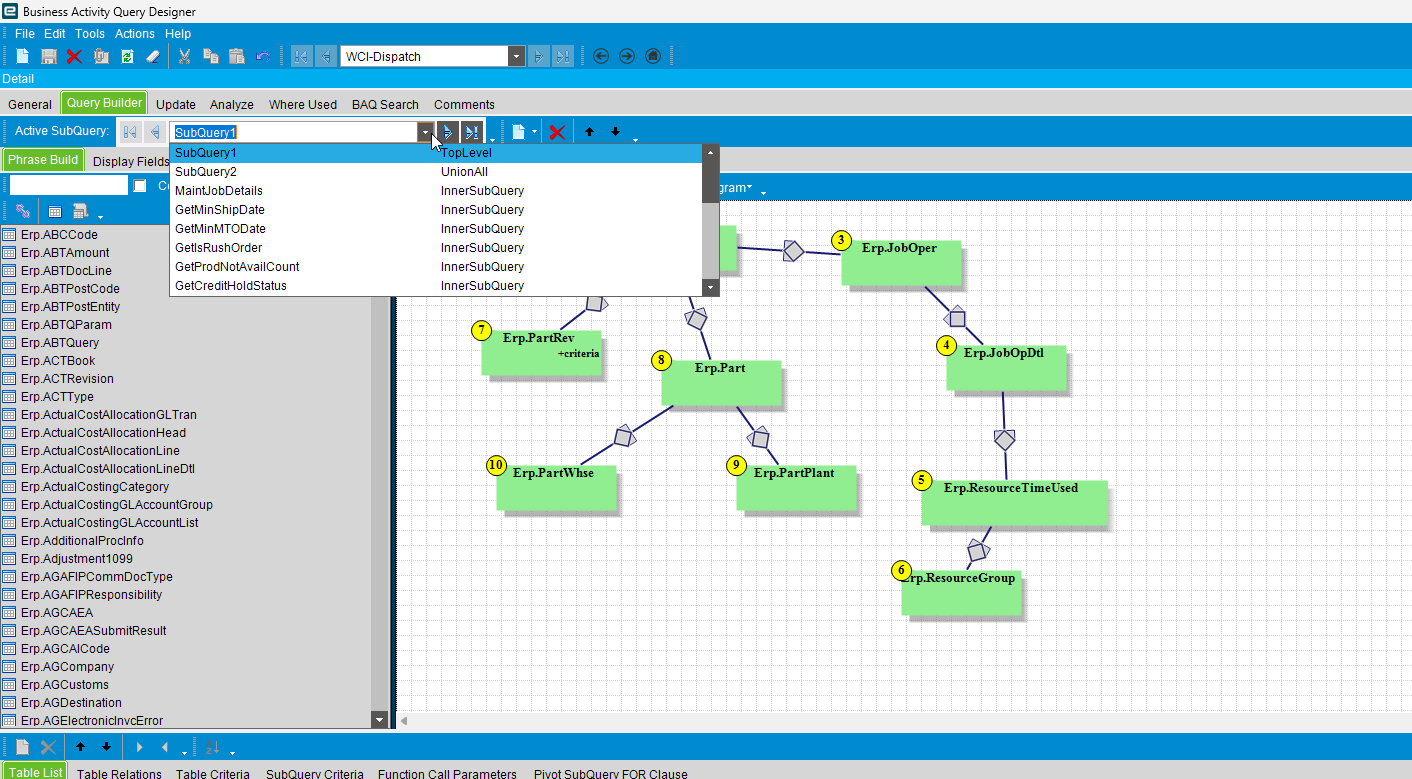
Did you use BAQs (Business Activity Queries) to extract the required production, labour, job and downtime data? If so, would you be willing to share your BAQ structure or approach?
Is Epicor Kinetic alone sufficient to calculate OEE accurately, or does it require integration with additional machine-monitoring software or IoT solutions to capture real-time machine data, such as actual running time, idle time, downtime and machine output?
How do you capture and record machine downtime in Kinetic?
Are there any recommended Epicor modules, third-party applications or integrations that you would recommend for this purpose?
I’m particularly interested in understanding what can be achieved using standard Kinetic functionality and BAQs before considering any additional software or integrations.
Any examples, recommendations, lessons learned or BAQs that you could share would be greatly appreciated.
If you are wanting to track real-time behavior then you are going to need a machine-monitoring software such as Harmoni, Amper, or Tulip. I’ve implemented Amper but switched it out with Harmoni later. There is an Epicor product for machine monitoring but I haven’t touched that.
The most effective way for you to get the machine uptime and downtime with machine-monitoring is to connect an ethernet cable into the controller of the machine so you can read the codes. Last time I used it Amper does have the option for connectors you can clip around the power cables so you can tell when the machine heads are running or not. Less data than the ethernet but if you have an older machine with no ethernet port then that’s your next best option.
A good machine-monitoring system will be able to connect directly with your ERP so for the performance it can pull the standards that you have set for the resource and for quality that is just a calculation for parts flagged as good vs parts flagged as scrap/nonconformance. Harmoni can directly integrate with Epicor so when people log their parts through a terminal a REST call will populate the labor record.
I have not tried Tulip but I do want to. Its main feature is that it is highly customizable and you can setup the dashboards and connections however you want.
One more fun thing is that depending on if the machine-monitoring can read the gcode that is sent to the machine then you could have it count a specific code or the end of the file as a completed part and then have that be automatically sent as a completed part into Epicor.
I was never able to implement this due to the types of parts manufactured in the shop having alot of variety but if you do manufacturing line type machining then you might be able to do it.
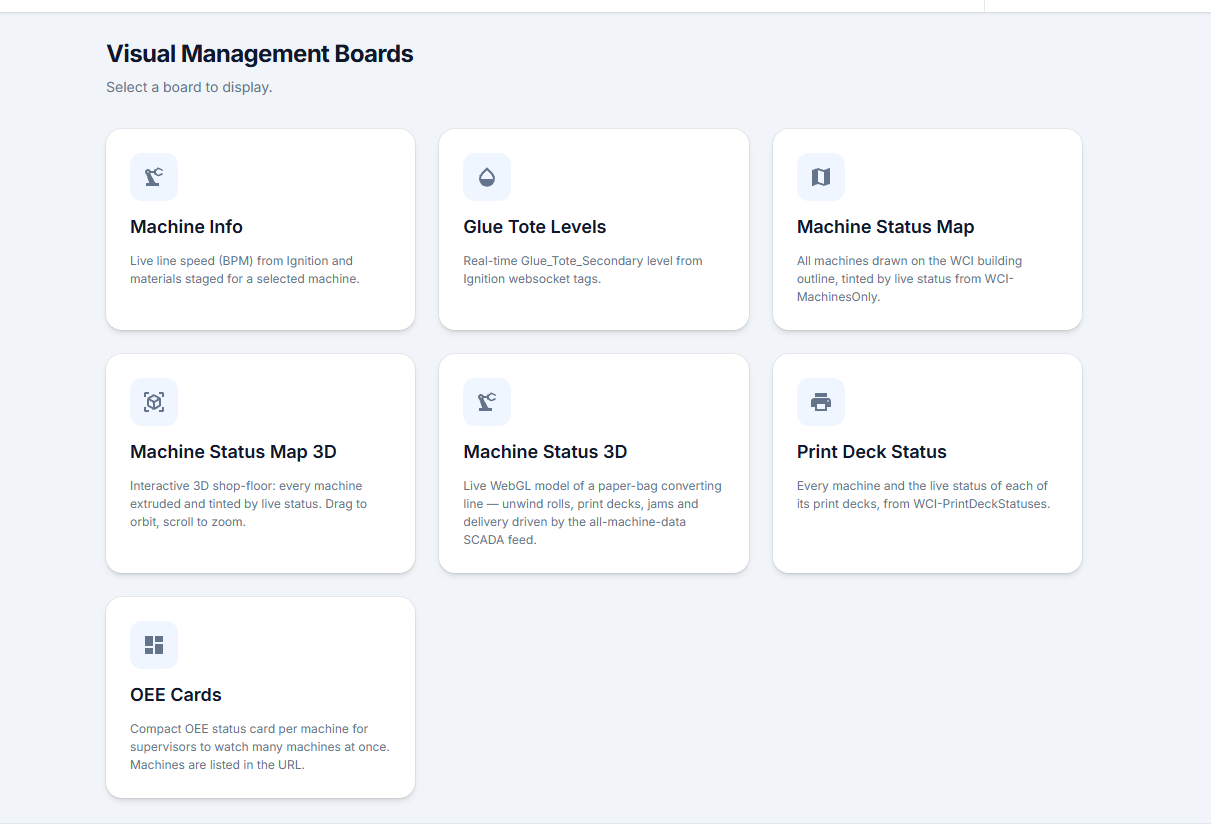
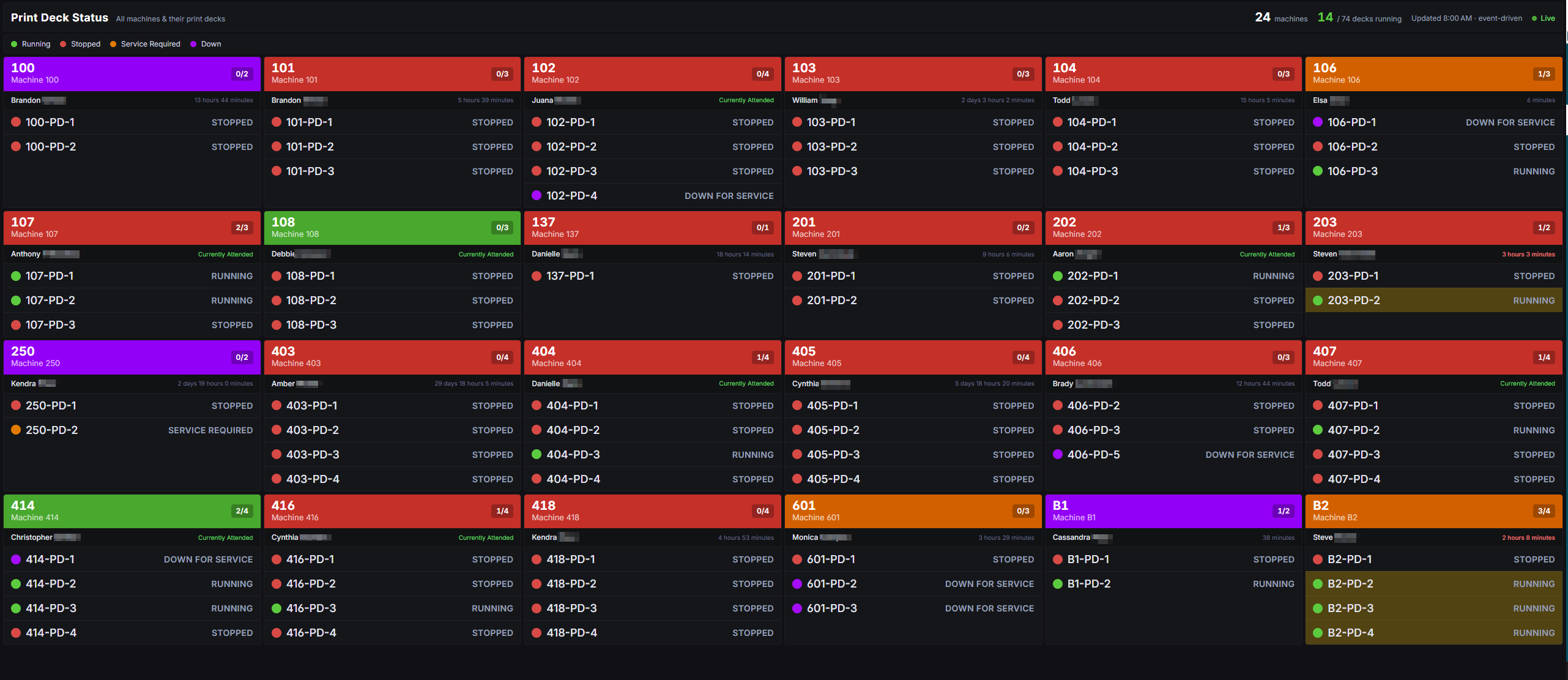
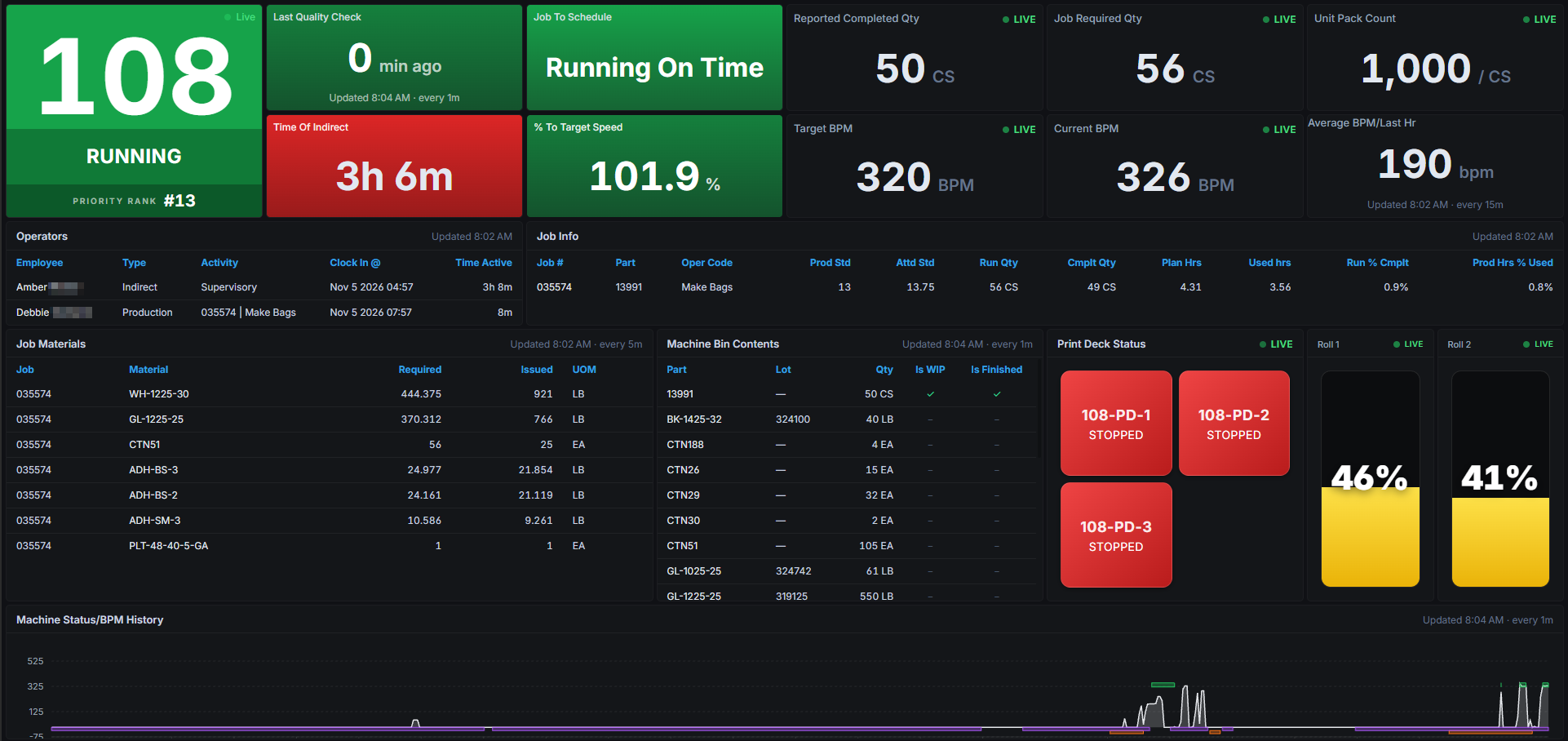
Define “successfully” , but yes we have but required more parts and pieces than Epicor has out of the box.
BAQs were not the most efficient way to go about it. The queries got very complex, so views and data aggregation came into play for us. So external queries it is.
Really depends on your environment and what you accept as OEE. We use PLCs to record actual runtime and compare that against estimates in Epicor and reported runtime (gives us punching accuracy of the employees)
We abandoned Epicor’s MES downtime feature, and rolled out own. It gets recorded with statuses on Equipment records along with Indirect labor details that have custom columns on them for downtime reason codes filled out at end activity
Ignition SCADA is still our go to for PLC integration. Grafana is great for getting nicer web display dashboards up and going for cheap
Overall hard questions to ask because one size doesn’t fit all. Also with where AI is at these days, we have started replacing Grafana with home grown dashboards built from BAQs/EFXs and AI (angular based). Grafana is still a great place to start for free though.
This reminds me of a new book I just read from the people at AXIOS, called Simplify. (Included in your Spotify Premium subscription or available on Amazon.)
TL;DR
AXIOS made a name for itself on providing the most amount of information in a minimal package - much like what Josh is showing above. It’s not long (@220 pages) and has some keen insights. The main author is Jim VanDeHei, who is also from Wisconsin. Coincidence?
To contribute, we record time into 4 buckets for use to display KPI for each resource.
The first 3 are recorded by operators recording their activities in MES. Setup/Production/Indirect.
We have a small customization on indirect activity entry that allows the operator to enter resource ID.
The 4th bucket is idle time which is just a balance of the hours for the day minus the first 3 buckets and we compare the expected of each against actual.
On material issuance and backflushing? Absolutely. When we’re trying to backflush 0.003456874 pounds of glue per parent yeah things get whacky. Epicor is not historically great at rounding.
Additionally depending on the solids make up of the adhesive the poundage is rough. Volume is volume.
Same with paper. Thickness can vary from roll to roll or throughout a roll. so a 100lb roll can be 500lnft but so can a 150lb roll. When we yield a 11" long bag, well the length is the length, the linear feet is the linear feet. Nothing left to interpretation there, it is what it is.
The thing is man when there are different solids the amount of gallons or mL that you need are going to be different because it will dry/react differently.

 , but yes we have but required more parts and pieces than Epicor has out of the box.