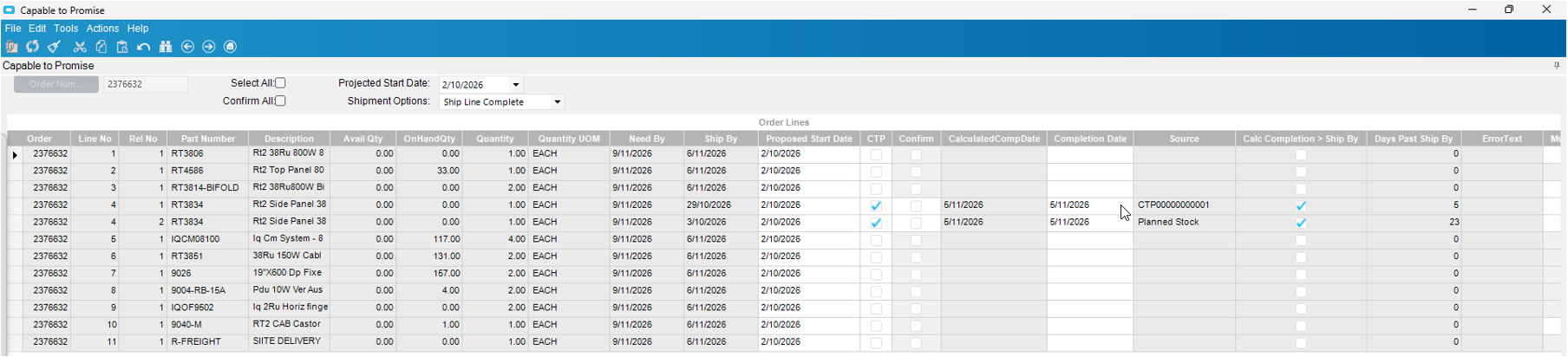
Hi all, we’ve been facing significant challenges with understanding CTP results, and I have another example from today, which I will use as an example to explain the issue, and it’ll be great if someone can help us understand why CTP gives the wrong date. Thanks in advance for your help!
My analysis is that CTP should have given us a date close to the ship by date because we have enough stock to meet the demand, it should not have pushed the completion date to January 2027.
CTP Case Study
Scenario
On 1st October 2026, Sales raised a complaint that CTP told them that we cannot have enough of RT3834 even though we have enough stock on hand to cover the new demand.
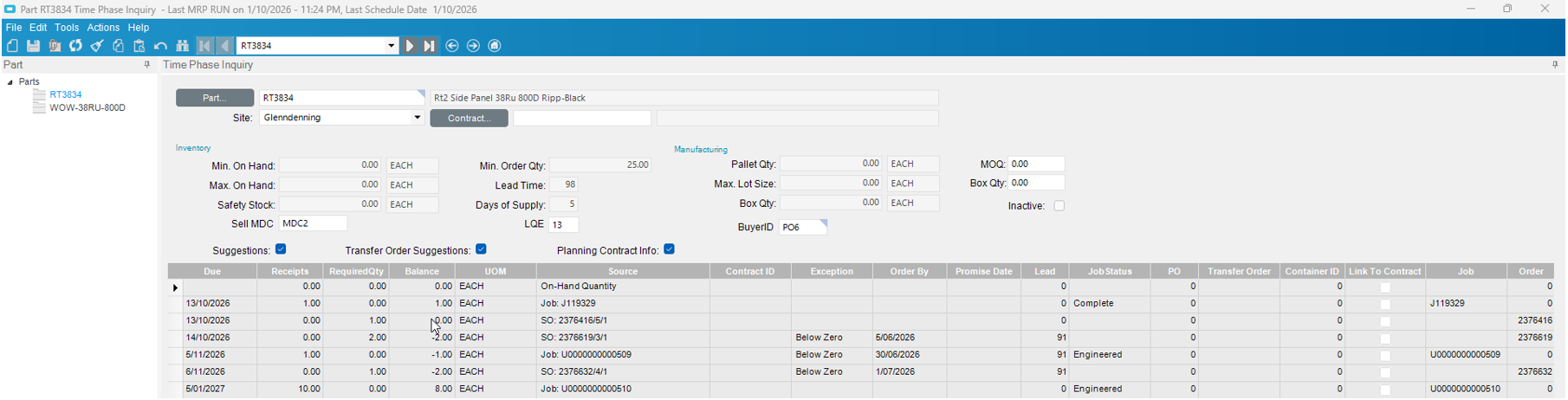
RT3834 is confirmed as a manufactured item and has a leadtime of 98 days.
When running CTP calculation, the following metrics were used:
- Ship by: 6th November 2026
- Need by: 9th November 2026
- Proposed start date: 2nd October 2026
- Ship Line Complete.
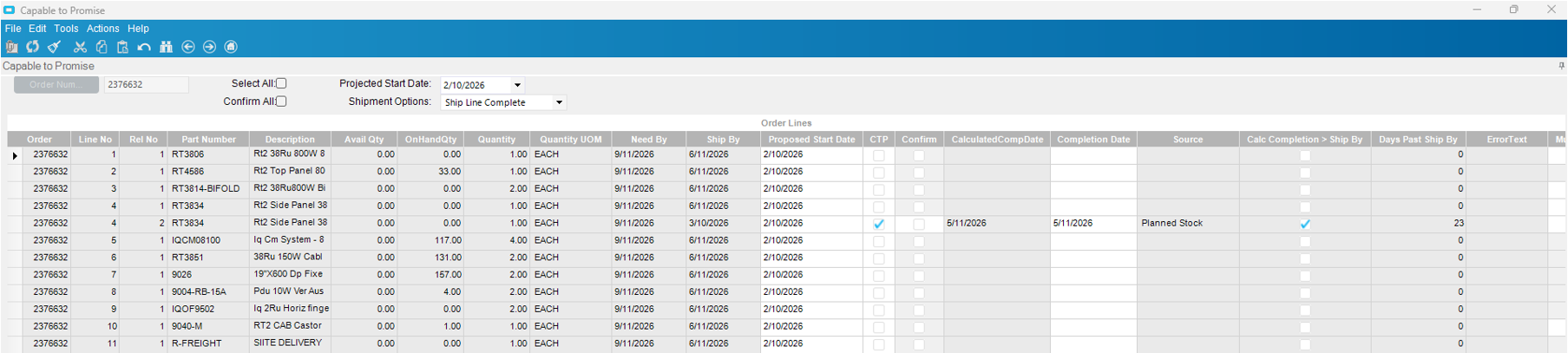
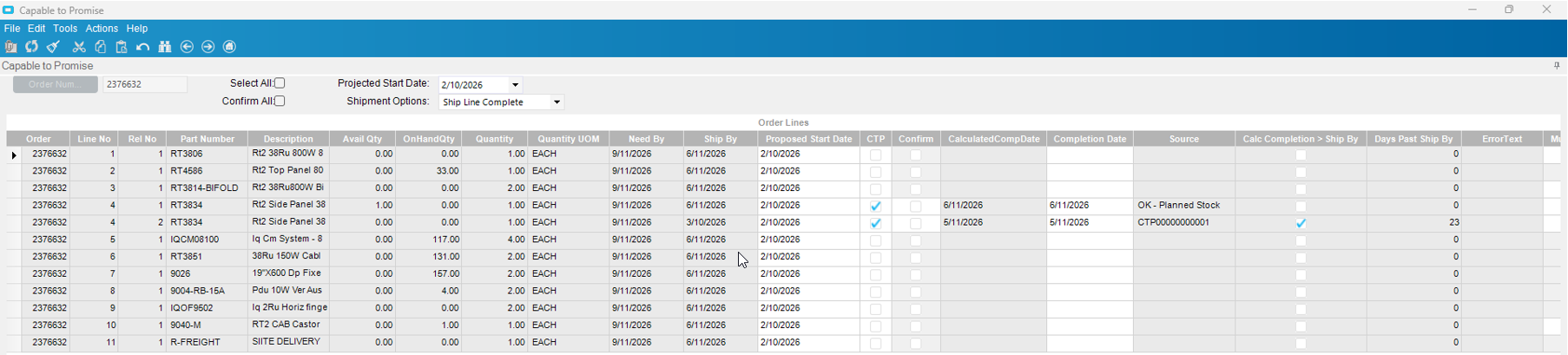
CTP gave the completion date as 5th January 2027, with the source as “Planned Stock”
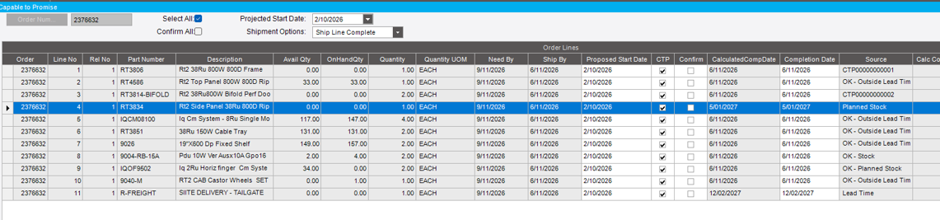
Figure 1: CTP Calculation shows 05.01.27 as Planned Stock
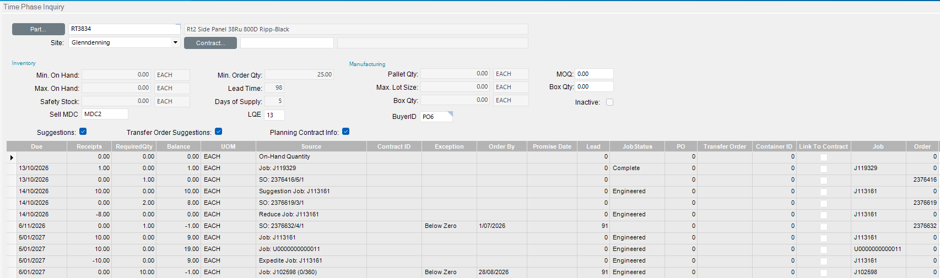
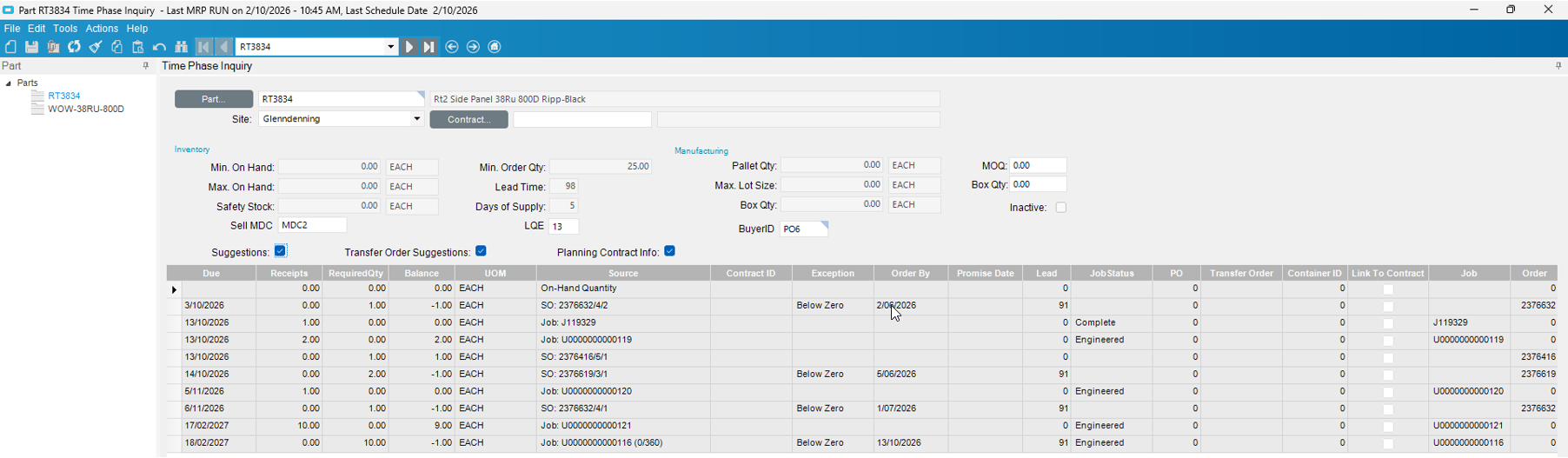
Figure 2: TimePhase for the part that we calculated CTP on
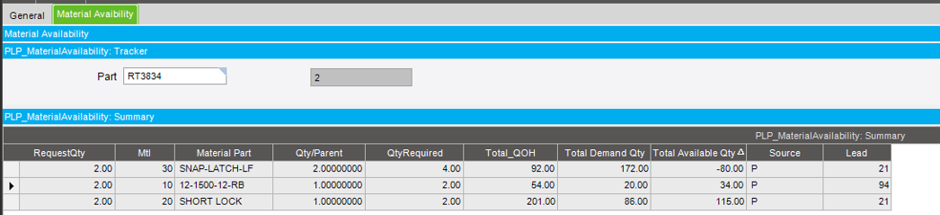
Figure 3: Material availability dashboard shows enough stock on hand and the demand is less than stock on hand
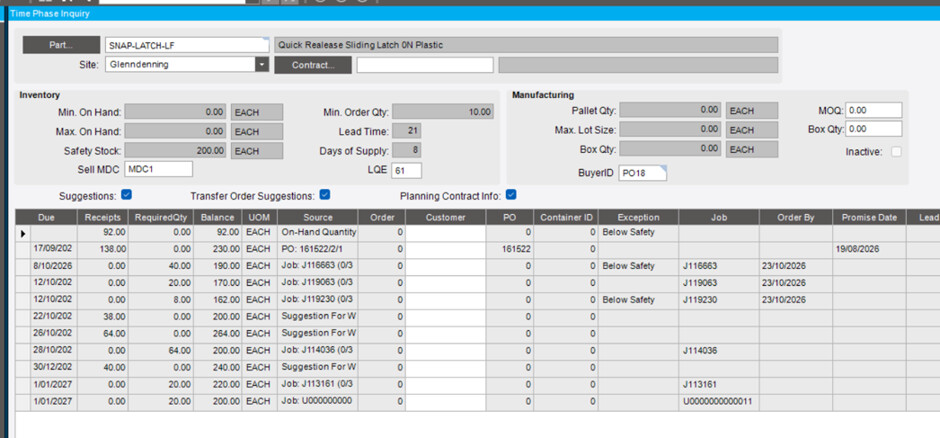
Figure 4: TimePhase shows enough stock for Mtl 30, but constrained because SOH < SS

Figure 5: TimePhase shows enough mtl 10 available, but constrained because SOH < SS
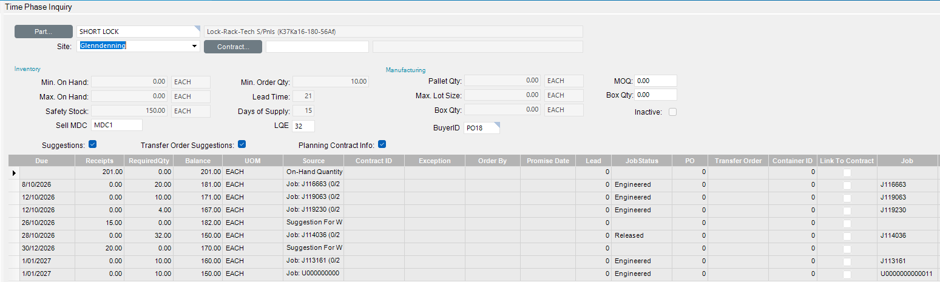
Figure 6: TimePhase shows enough stock to cover demand and SS
Root Cause Analysis
Pre-requisites
There are a few pre-requisites that are currently driving CTP calculation which need to be made aware:
- All resources are infinitely planned, so if there were a constraint of capacity, CTP would say you can do it sooner. This is ruled out here as an issue because CTP is giving a later date than expected.
- CTP will only look at 1 level down ie if you are making the part RT3834, CTP will look at:
- The stock availability of the part itself as per time phase
- Materials availability of the part as per time phase
- However, what CTP will NOT do is that it will not look at any levels below that. So, for example, if the part 12-1500-12-RB is itself a manufactured part, CTP will not look at the materials for that in time phase and determine when they will be available, it will simply use the lead time calculated by the mfg lead time calculation.
- The trigger for setting a material as constrained is
- Stock On Hand >= Safety Stock + Total Demand within leadtime
- That’s why mtl 10 and 30 are constrained materials, because even though the SOH meets the demand, it does not meet the safety stock. Therefore, the constrained material flag is set, and any CTP calculation is going to look at time phase for these parts or default to lead time if not enough available stock.
- When CTP calculation runs, the calendar that it operates on is a 5 working day calendar. So, lead times will also use the same calendar. We swap it to a 7 day calendar only for the purposes of mfg lead time calculation, otherwise, we always work with a 5 day calendar because we operate 5 days a week, excluding overtime.

Figure 7: BoM Tree Analysis shows constrained material for 94-day lead time
Findings
- As per the BoM tree analysis, it would seem that 12-1500-12-RB might be the constrained material causing the delay, but you can see in time phase that the lead time of 94 days should not matter because we have incoming stock of 45 which also brings us above our safety on 9/11/2026. The constrained should be set to 9/11/2026.
- The other constrained mtl 30, SNAP-LATCH-LF, has a leadtime of 21 days, and should not be the reason why CTP suggests the date for January.
Conclusion
It seems as though the system has used the leadtime of the manufactured part to determine that planned stock is incoming and it should be able to deliver it sooner compared to the lead time, because the leadtime is pushing the due date out to later in Feb 2027. If CTP would work as expected, the CTP date returned should have been 9/11/2026. However, given the recent testing we did on CTP, we saw that CTP would commit safety stock on hand ie allow you to go below safety stock as well when trying to commit to a customer order, therefore, given this, CTP should have given us a date equivalent to “this level” manufacturing lead time of the part ie 2 days since we have enough stock to meet the new demand, also note that the ship by and need by dates are also in November.
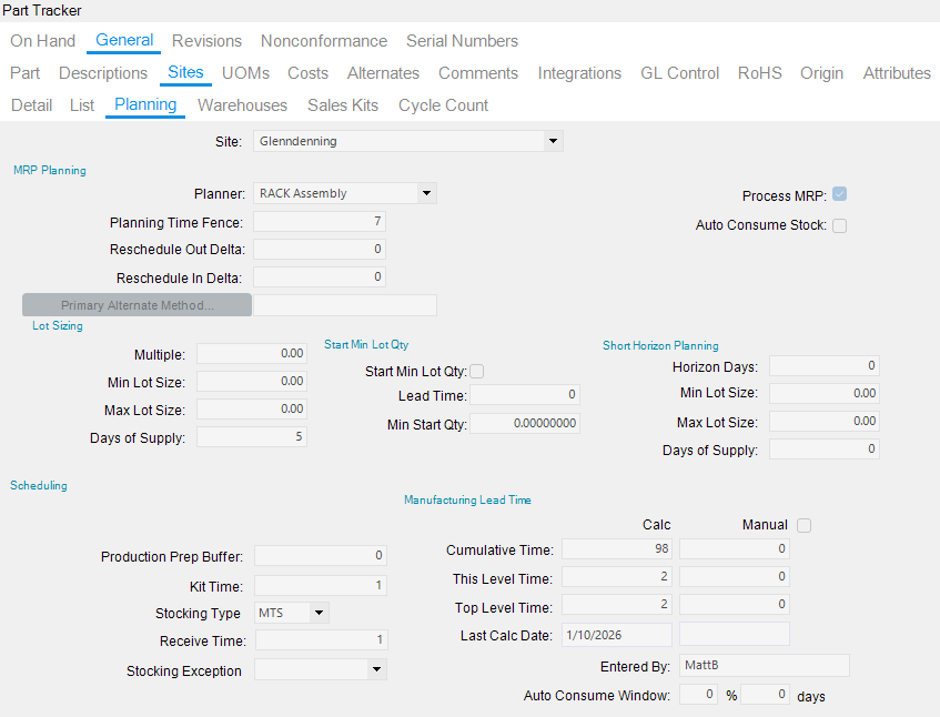
Figure 8: Mfg lead times for the part

Figure 9: Working day calculation for 98-day lead time