I’m trying to learn a bit more about the infrastructure of Epicor. We’re on-prem, so I’ve got a handle on MS-SQL and MS-Server. What’s still foggy is how cloud handles things, and what the future will be. Lots of talk about migrating to Linux Containers this past spring for the cloud customers. There’s lots I don’t understand, but am learning.
After googling about linux containers (namespaces and cgroups, yay!), does that mean that each cloud instance is running in it’s own container? Does that contain an instance of IIS, since that’s what the Epicor app server is installed on? Or share it with all the other containers on the bare metal linux server?
Same with SQL - Does each container have their own DB, but it’s actually on some massive MS-SQL Server instance? Or somehow shared?
Curious minds want to learn! Maybe we could use this to make spinning up test environments easier / quicker / less hardware resources needed while on-prem is an option for the next 2 years.
They run their containers on Azure Kubernetes Service (AKS) or used to. I don’t know if that’s changed. At Insights their cloud guys were talking about becoming cloud agnostic so that they could run containers in Azure, AWS, or GCP. Epicor is primarily in Azure but they have ECM stuff in AWS.
Right now it’s shared SQL servers. Each customer has their own dB for prod, test, etc. They run SQL on VMs and everyone shares. At least that’s my understanding. SSRS is shared too as far as I know. Which has led to a lot of cloud issues due to resource usage.
Thanks, Chadd! So AKS would be running IIS in each container, specific to each customer’s app server(s)?
Googling:
How IIS Works in AKS
Windows Containers: You package your legacy .NET Framework or ASP.NET applications inside Windows Server container images that have IIS pre-installed (such as Microsoft’s official IIS base images). [1, 2]
Windows Node Pools: AKS clusters run on Linux by default, but you can add a specialized Windows Server node pool alongside your Linux nodes to schedule and execute these Windows containers. [1, 2]
Management: You deploy and scale IIS pods using standard Kubernetes manifests (deployment.yaml) and services, just like you would with Linux workloads. [1, 2]
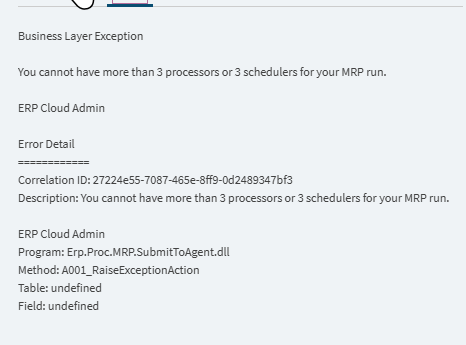
One more that popped into my head - What about for MRP - number of schedulers and number of processors? What does one use in cloud? Is it the number of processors that the container has access to?