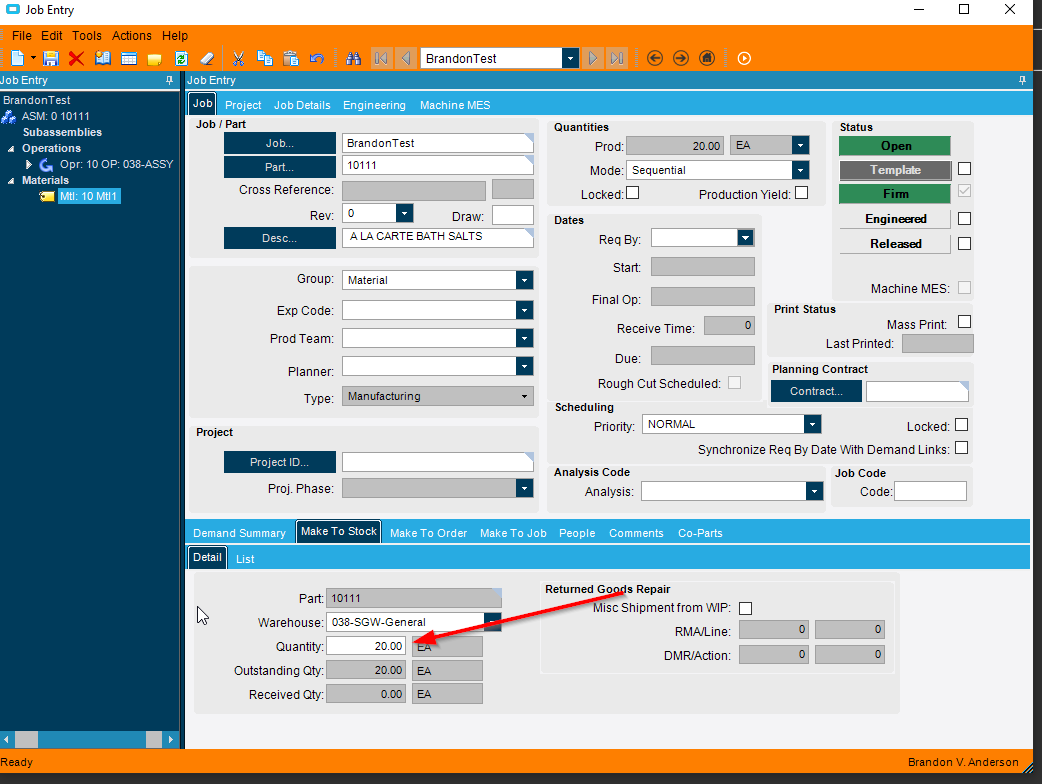
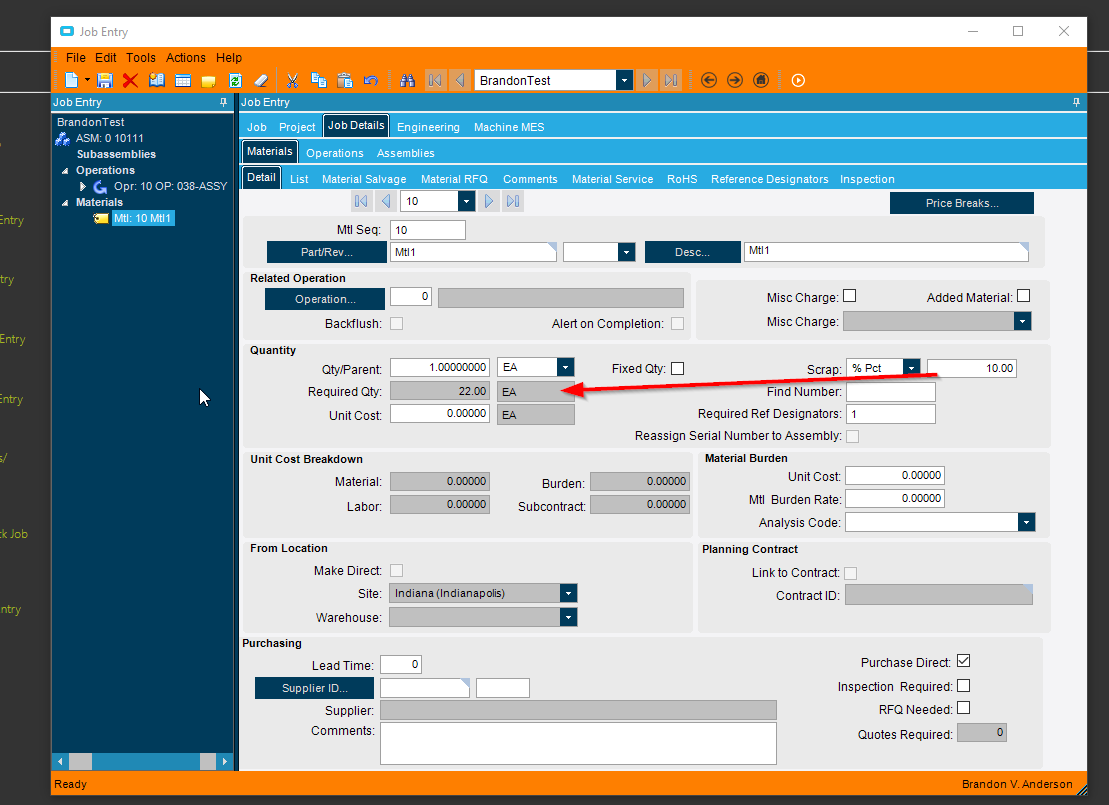
The scrap rates for the material is on the material, not the operation. See the screen shots below for a sample job of 20, with a material at 1 per with a scrap rate of 10% give a required material of 22.
Scrap rates on the operations have to with how much labor is required. So if you add a scrap rate on your operation, it adds it to the labor time (not the material)
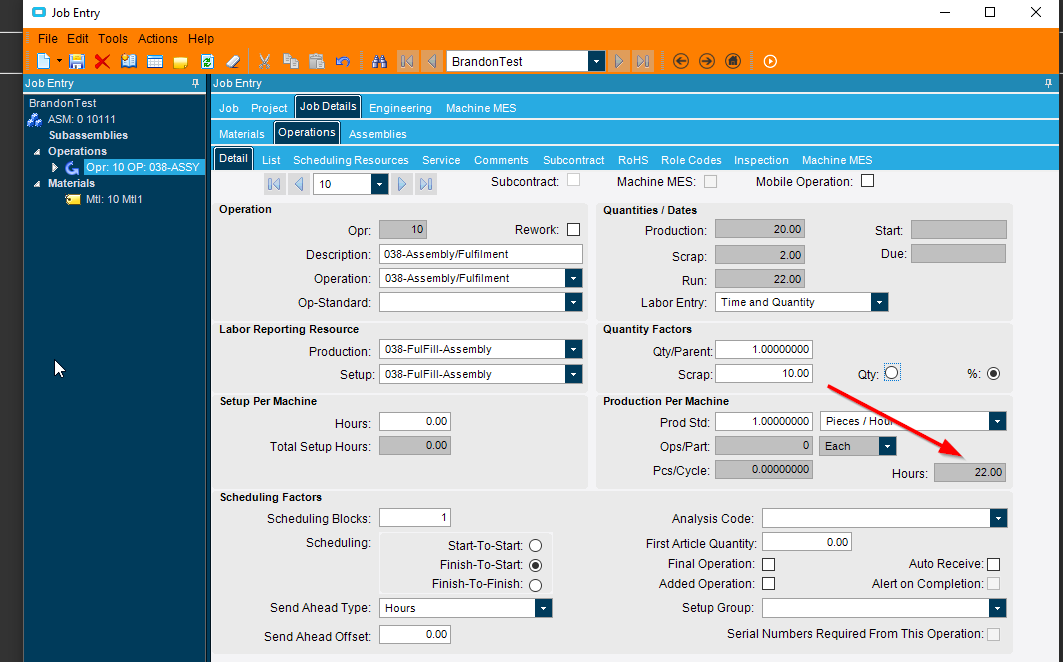
These are separated to give to the appropriate control that you need as different industries have different definition of what that scrap would be. For example, if assembly has a scrap rate of 2%, they can probably just take it apart and put it back together again, so there is no wasted material. While a machining operation probably ruins the material. But Epicor can’t know that, so they put you in charge of figuring out the material scrap rate, and the labor time scrap rate separately.
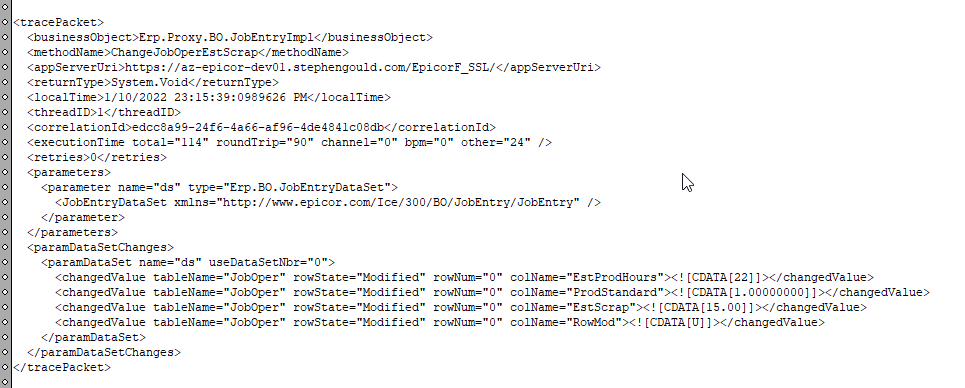
If you want to relate the operation scrap rates to the material scrap rates, a BPM can be make to recalculate the material scrap rate to equal the total of the operation scrap rates if you so desire.
That will go on this method.
Remember whenever trying to figure out what Epicor (or any software for that matter) is doing, keep the perspective that Epicor has to be a jack of all trades and try to fit as many industries as possible. That makes it a master of none, and the trade off to that is it usually doesn’t make 100% for every process in your business because each business has it’s own way of doing things.