Perhaps we should start a POLL on what each person is planning to do next.
I get the instinct, but I think that might be a bit premature right now.
Epicor has not shared anything beyond the initial announcement yet, and I am fairly confident they are watching and listening closely to the feedback coming out of this community. At this stage, they are learning as much as we are.
ERP decisions carry huge, company-wide implications, and most organizations will need time to work through the options internally and directly with Epicor or any other vendor before forming a real position. A poll right now would likely reflect emotion more than informed planning.
Let’s give Epicor, and ourselves, a little time to digest this and see what additional clarity or options emerge. The conversation we are having is important, and staying thoughtful and constructive puts us in the best position to influence the outcome.
I remember that well…and I came back and told my boss not to worry…HA! So much for that. I really REALLY swore I would never EVER implement another ERP…ugh!
Custom Cloud is a hosted deployment of Epicor Kinetic in a dedicated, single-tenant Azure subscription.
It is not an “affiliate program” where any third party can host SaaS. Instead, it’s a white-labeled offering delivered through Epicor with a designated hosting partner for customers who need more flexibility than Public Cloud and don’t require the full Enterprise Cloud bundle.
Hi all.
Cloud user here. We debated for quite some time whether to go with an on-prem instance or public cloud. We came from an on-prem SQL environment and were used to having that direct access. The thought of losing that access certainly created a lot of anxiety for our development team. Our research showed that more and more ERP software providers were moving toward cloud-based subscriptions as were other software providers. Reluctantly, we chose to go with the cloud-based subscription with the understanding that we could pull everything back to on-prem at a later time if needed. We did purchase the read-only database, and that has greatly simplified external access via SQL views for external report writing and label printing. There are still areas that we feel Epicor SaaS is lacking; Log file access, higher level query capability in BAQs, Advanced Print Routing and Report Data Definitions, Report creation/testing etc… The need for the Edge Agent and the printing/file access issues it creates is an annoyance, but we have been able to work with it. Bartender integration is difficult on the cloud, but I don’t know how well it works on-prem either.
As far as support goes, the cloud team has been exceptional. Cloud tickets are generally handled quickly and with no issues. Regular support is a different animal, but it appears to be that way on-prem also. I only open general support tickets as a last resort.
Automated upgrades are nice. They force us to remain current, and the upgrades themself are seamless. They have caused some issues with customizations that were not caught in testing and some system functionality may be broken that is not quickly corrected. So far, these have not been critical issues, but they are extremely upsetting to the end-user. Especially when Epicor’s response is ‘it will be fixed in a future release.’ There are some things that simply cannot be tested in the Pilot/Third environment like Credit Card transactions, Sales Tax calculations, ECM imports etc.. without having duplicate third party sandboxes available.
All of that being said, we are on our third year of Public-cloud. We have not reverted to on-prem. We have been able to utilize the system with only basic customization layer tweaks and of course, utilizing the read-only database outside of Epicor.
We don’t have any Governmental requirements that would require an on-prem instance, and we don’t have any integrations that absolutely won’t work with a cloud-based system. So, other than the anxiety over the loss of direct control, we have not had any major issues from going cloud.
With the end of on-prem support coming within the next few years, I am convinced that, at least for us, the decision to
go with the cloud was correct.
I do feel for those that have years of custom integrations built up on-prem. That will be a daunting task to move to the cloud.
@deepak, I agree with @josecgomez on this… right now, we have almost too much information. an additional poll may just confuse the issues. We need to let this settle just a bit. Once we are able to consume and let the information digest, there should be even more clarity. Keep the comments and suggestions rolling.
Agreed! Too much information was the reasoning behind a POLL. It’s hard to make sense after close to 600 posts, exactly who is planning to do what. Perhaps Epicor will also be able to make some directional decision if they have some numbers to looks at logically. If not polls, whatever can give some numbers would possibly help is a decision.
Full access and control. Attaching a debugger to a running ERP (not prod of course) is PRICELESS.
Anyone can install Acumatica on any win machine w IIS/SQL. Try it!
As far as licensing, I believe they may have dropped perpetual, but ‘Private Cloud’ means anywhere - my own or 3rd party.
I just wanted to take a quick moment to say how thankful I am for this group. The people here are incredibly helpful across so many areas of Epicor, and honestly, without this forum, I don’t think we’d have a truly constructive way to communicate with Epicor at all. I also don’t think Epicor would be as successful as it is without this kind of community.
There have been plenty of times where discussions with @timshuwy, @olga, @pferrington, @aidacra, and others I’m forgetting have led to real, positive changes that benefited both Epicor and us as users. (Edit: as I remember…@bart_elia)
Thanks to everyone who helps make this site what it is!
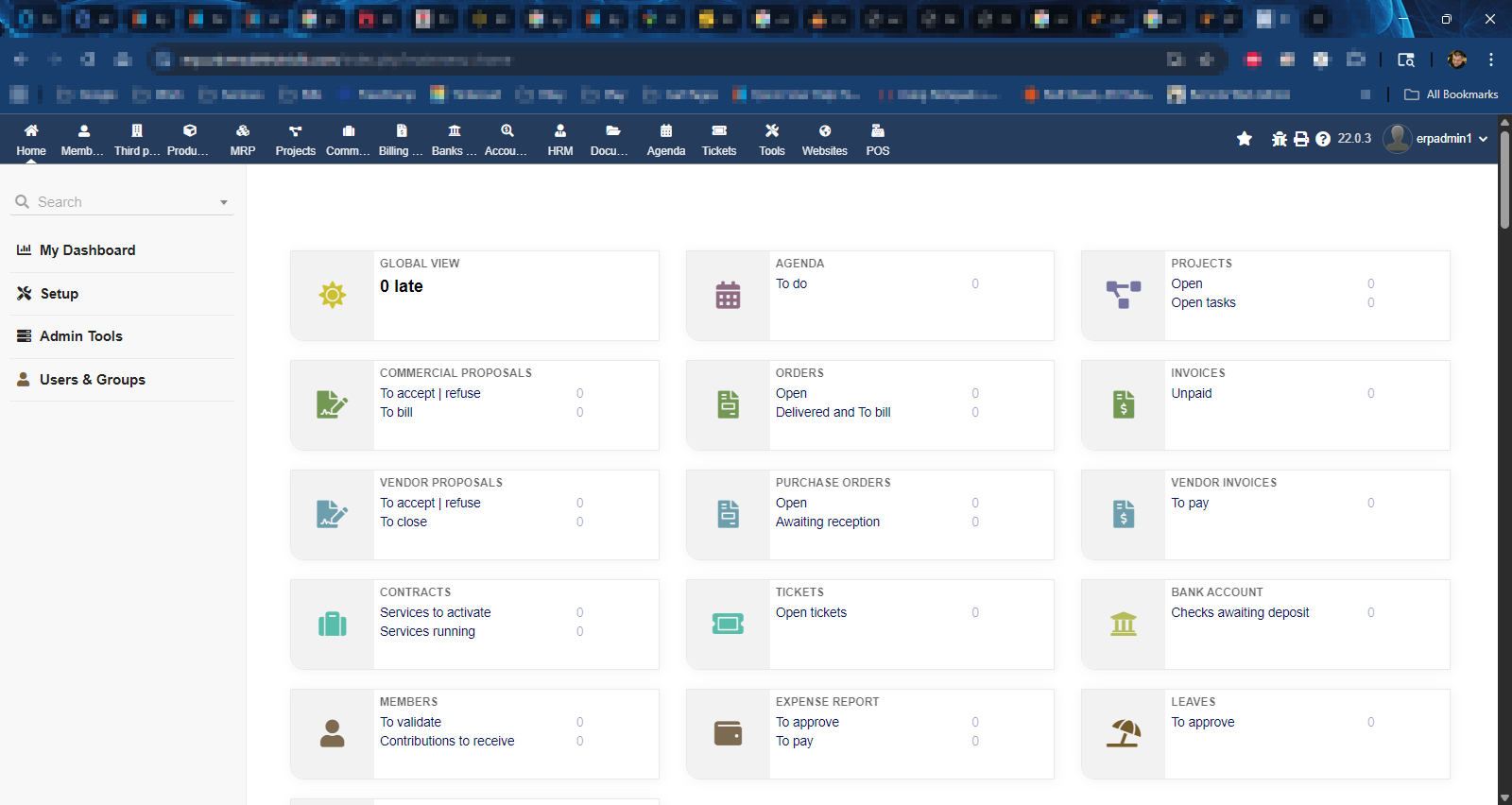
I spun up dolibarr a few years ago when considering Epicor Alternatives, I thought it was pretty well rounded for what it is, and had some good depth too. I could see it being a functional replacement for some businesses for sure.
I wonder how much value there would be in spinning up a function that exports the Db object to a .sql file to be ingested as an intermediary for data exfil…
It will stink even worse—and be far more painful—for small and mid-size companies that run Epicor in a cost-effective model, especially those sharing App and DB servers on-prem or in private cloud setups. No one wants their entire IT budget to be consumed by an ERP.
Also, what happens to customers hosted in partner-managed clouds? If migration becomes mandatory, who absorbs the cost and effort—Epicor, the partner, or the customer?
Can you explain a little more on the above, especially APR, RDD and report creation and testing? Are you saying that the cloud offering for those are not very good?
We’ve been running Epicor on-prem for around 17 years, starting with Vantage, then E9, E10 and now Kinetic. We’re a 24/7 manufacturing business with a small IT team and no dedicated Epicor developers. Epicor support and development is something we fit around everything else we do.
Over those years we’ve built up a large number of customisations, BPMs and BAQs. Our business doesn’t fit Epicor out of the box, so we’ve had to be creative to solve real operational problems. That work represents a lot of time, knowledge and dependency on how the system behaves today.
Because we run 24/7, upgrades are hard. We can’t upgrade “little and often”. We get very limited windows, and a full upgrade — including testing and validation — usually takes between three and six months. Like others here, we’ve often been told “that’s fixed in a newer version”, but upgrading isn’t a quick or low-risk exercise for us.
The move away from the Classic UI to Kinetic was already a concern. While I understand why Epicor wants to do it, the amount of work involved shouldn’t be underestimated. Learning a new way of customising and rebuilding complex, business-critical changes is a big ask for small IT teams.
We’ve avoided serious discussion about moving to Epicor Cloud so far because many of the concerns raised here apply directly to us: forced updates, reduced access to the system, reliance on external connectivity and infrastructure we don’t control, and higher ongoing costs.
The announcement that on-prem development ends with 2028.1 is what really worries me. While support may continue for a while, for organisations like ours this isn’t a long-term option. We’re subject to Cyber Essentials, which requires all software in the stack to be fully supported. Freezing Epicor on-prem while operating systems, databases and security tools continue to move on puts us in a position where we either fail compliance or take on increasing risk.
My concern isn’t simply “cloud vs on-prem”. It’s that this decision effectively forces a direction on customers like us, regardless of our operational constraints, resources or compliance requirements. For businesses with heavy customisation, small IT teams and continuous operations, this isn’t a preference — it’s a major business risk that needs to be acknowledged more openly.
I think Epicor Leadership should visit on-prem installations that utilize Epicor to the max, to see some real magic.
I also think large Cloud customers would be so jealous to see that we solve problems and do things at 5-10x speed, even when adhering to SOX Compliance (Segregation of Duties), and Publicly Traded Corporate red tape. If you are on the Cloud, you are actually harming yourself with your implementation being 100x more painful than they have to be, pushing the hosting aside.
I could have never solved the code how to create my own Landed Cost Disbursement option and logic without on-prem, not in a million years.
There should be an Annual On-Prem vs Cloud Race where you have to solve 5 problems, or describe logic, the fastest and in-depth answer takes home 50,000$
On-Prem has SQL Trace Tools, .NET Decompilation Tools, IIS Debuggers, Tracing among other things… Cloud only has Trace and will miss all the logic in the triggers to understand why something is behaving the way it is
If you do an upgrade I can tell you exactly within 15 minutes what the upgrade uplifted, touched, changed by simply comparing the SQL Data and SQL Schema? Most of the times it doesn’t matter, but still it’s something the Cloud folks cant do.
If I run MRP I can run SQLYog and tell you exactly what MRP did, I can time capsule the entire SQL Write, Deadlocks, Reads and graph them out, I can find the needle in the haystack and figure out easily that Epicor has a bug in their min/max calculations, without scratching my head for 6 months and Epicor saying “its you.”.
I can snapshot my database, run MRP and diff the database and exactly understand what happened.
On-Prem is a strength, not a weakness. 
Real solutions and in-depth knowledge on here usually came from folks on-prem.
In order to solve that Copy to Excel issue, if you go to support it will take you a very long time, because they will ask the same questions before ever escalating it to @pferrington or @aidacra (not to fix it, to merely understand it, that you must have a default printer even if its a PDF Reader)
- Is it a driver issue
- Is it a registry issue
- Did you recently update Windows?
- Let’s rollback that Windows Update because Windows is known to have problems.
- Is it a Windows Profile issue (only happens to 1 person)
- Reinstall Office 365
- Is it a Office 365 Update issue
- Is it a COM issue
- Can you upload Event Viewer Logs
- Is Anti-Virus blocking writing to Temp folder causing a delay
- Let’s Reinstall .NET Framework
- Etc… Etc… Etc…
Who would have guessed a Printer had anything to do with Copy to Excel… Support would be completely lost and I dont blame them.
A User now must involve Epicor Support and Local IT since they are not Local Admin, and have no clue what any of your questions mean, and if you scale that to 400 users, yeah you still need an on-site IT Team regardless… The Cloud doesnt fix that.
You could just:
- Debug first, and take Epicor out of the equation (98% of the time the answer is solved in STEP 1).
- The rest of the steps or enjoy 120 minutes of your time to do other things
That above is of course a Classic Client example to keep it simple, but stuff like that also happens on the Server Side which on-prem folks can diagnose with ease.
You sum up my thoughts from earlier in a more elegant way. Thanks for the post
We used to have to stage a new Hyper-V complete the upgrade, SQL Updates among other things, swap the Hyper-V, then within 30 minutes Uplift the code by installing all the .cab’s with Fixes / Tweaks / BPM Adjustments. At a 24/7 International Multi Timezone company.
On-Prem is a strength, or if you have Citrix AppV, you can get even more creative.

I DON’T KNOW HOW I FORGOT ABOUT THIS.
One of the the things that we have to do ALL THE FREAKIN TIME, is look at and create extra indexes in the database to be able to run complex queries and dashboards within our massive database. Epicor is HORRIBLE at having efficient indexes, is loaded with a ton of garbage indexes that do nothing but slow down the database. If we have to go cloud and lose the ability to do that, we lose a TON of a ability to do some of the very things that make Kinetic so much better than other systems and that is use the BAQ engine.
An SQL indexing project needs to be a number one priority for epicor for a LOT of reasons, even before they announced this move, but this on makes this problem even worse as larger customers are going to get moved to Epicors hosting and start causing massive slowdowns.
Go vote for this idea please.
`Log In - Epicor Identity
Half of our MRP issues were Index related, with one fix literally being fill your database with junk data to even the fill factors. Like make a fake Company that you dont plan to use and use that to bloat it with data so the indexes behave (Source: Epicor).
The database after a single MRP run is completely fragmented.
That brings me to another issue we have seen at other customer sites. If the # of records in a table are not a lot (typically less than 5K), the SQL optimizer picks a different execution plan.
The solution we have taken is to pump in dummy records (copy records to a fake company within the same table). At this time let’s go with the fill factor option. If needed we can discuss that later.
– Senior Epicor Developer
In addition we have BAQ Issues where if we join on Company and PartWhse has data, its slow, if it doesnt its fast, if you join on BinNum its slow, if you dont (even if you are getting more data its super fast) all boils down to indexes.